
5 Reasons to Invest in a Preschool and K-School Franchise in 2026
The Indian education sector is undergoing a significant transformation, and early childhood education is emerging as one of its most promising segments. For entrepreneurs looking for a business opportunity that combines social impact with long-term growth potential, investing in a preschool and K-school franchise in 2026 can be an attractive option.
The growing focus on foundational learning, rising parental awareness, and the expansion of organized education brands are creating new opportunities for franchise investors. India’s National Education Policy (NEP) 2020 places early childhood care and education (ECCE) at the foundation of the 5+3+3+4 education structure, covering children from ages 3 to 8.
Here are five compelling reasons why 2026 could be the right time to explore this opportunity.
A preschool and K-school franchise can offer investors access to a growing education market, an established business framework, increasing demand for quality early learning, and opportunities to build a trusted local education brand. With NEP 2020 strengthening the importance of foundational education, the sector has strong long-term relevance.
1. Growing Demand for Quality Early Childhood Education
Parents today increasingly view preschool as an important part of their child’s educational journey rather than simply a childcare arrangement. They are looking for safe environments, trained educators, age-appropriate activities, communication skills, foundational literacy and numeracy, and opportunities for social and emotional development.
This demand aligns closely with the National Curriculum Framework for the Foundational Stage, which recognizes ages 3–8 as a critical period and emphasizes play-based, activity-based and developmentally appropriate learning.
For an investor, this creates a strong opportunity to establish a professionally managed preschool that addresses the expectations of modern parents.
2. NEP 2020 Creates a Strong Foundation for the Sector
One of the biggest reasons to consider a preschool and K-school franchise in 2026 is the policy environment.
NEP 2020 incorporates three years of preschool or Anganwadi education into the five-year Foundational Stage for children aged 3–8. It also emphasizes foundational literacy and numeracy and recommends play-based and activity-based approaches to learning.
This policy direction makes early education increasingly relevant to the mainstream schooling ecosystem. A K-school model can potentially provide continuity from preschool into the early primary years, helping parents avoid the need to shift their children between unrelated institutions at every stage.
For entrepreneurs, alignment with these educational priorities can also make the business proposition more relevant to the evolving Indian education landscape.
3. A Franchise Model Can Reduce the Challenges of Starting From Scratch
Starting an independent preschool involves developing a curriculum, creating operational processes, building a brand identity, training teachers, planning marketing activities, and establishing parent communication systems.
A franchise model can provide a structured framework for many of these requirements. Depending on the franchisor, support may include curriculum guidance, teacher training, branding, admissions processes, marketing resources, technology solutions, and operational assistance.
This does not eliminate business risk, and prospective franchisees should independently evaluate franchise fees, recurring costs, territory terms, support commitments, break-even assumptions, and local demand. However, an established model can make the learning curve more manageable than building every component independently.
For entrepreneurs researching the market, HEI School India, being one of the Best K-12 School Franchise in India, can be considered as one of the brands to evaluate alongside other established preschool and K-school franchise opportunities.
4. Multiple Revenue Opportunities Can Strengthen the Business Model
A preschool does not necessarily have to depend on a single source of revenue. A well-planned K-school can potentially serve different age groups and offer multiple educational programs within the applicable regulatory framework.
These may include preschool programs, kindergarten, early primary education, daycare or extended-care services, enrichment activities, and other parent-focused educational offerings, depending on the school’s structure and local regulations.
The advantage of a broader model is that it can increase customer lifetime value. A family that initially joins a preschool program may continue with the institution as the child progresses into kindergarten or early primary education.
However, investors should create a detailed financial model before committing capital. Factors such as rent, infrastructure, teacher salaries, staff-to-child ratios, local competition, marketing expenditure, utilities, franchise fees, and student acquisition costs can significantly affect profitability.
5. Education Is a Long-Term, Community-Centric Business
Unlike many businesses driven primarily by short-term trends, education is connected to an essential and recurring need: children’s learning and development.
A preschool also has the potential to become a strong local brand. Parents often rely heavily on recommendations, reviews, school visits, teacher interactions, and word-of-mouth when choosing an institution for young children. Delivering consistently high-quality experiences can therefore become an important competitive advantage.
The opportunity is particularly relevant as India’s organized preschool sector expands and parents increasingly seek structured learning environments. Market research points to parental awareness, urbanization, female workforce participation, and changing preferences for organized early learning as important drivers of preschool and childcare demand.
What Should Investors Check Before Choosing a Franchise?
The opportunity is promising, but selecting the right franchise is critical. Before investing, entrepreneurs should examine:
- Brand reputation and parent trust
- Curriculum and teaching methodology
- Teacher training and academic support
- Franchise investment and recurring fees
- Location and territory rights
- Infrastructure requirements
- Marketing and admission support
- Technology and parent communication systems
- Expected operating expenses
- Local competition and demographic demand
- Regulatory and safety requirements
Do not select a franchise solely because of projected returns. The quality of the academic model, operational support, transparency of costs, and suitability of the location should be equally important.
Conclusion
2026 presents an interesting opportunity for entrepreneurs considering the preschool and K-school franchise sector. A growing market, increasing parental expectations, supportive education policy, and the expansion of organized early learning are creating favorable conditions for quality-focused education businesses.
For investors who want to combine entrepreneurship with meaningful community impact, a carefully selected preschool franchise can become more than a commercial venture—it can become a trusted institution for families in the local community.
Among the brands worth researching, HEI School India, being one of the Best Preschool Franchise in India, represents an option for entrepreneurs exploring established preschool franchise models. Ultimately, investors should conduct their own financial, operational, legal, and market due diligence before making an investment decision.
Related Posts
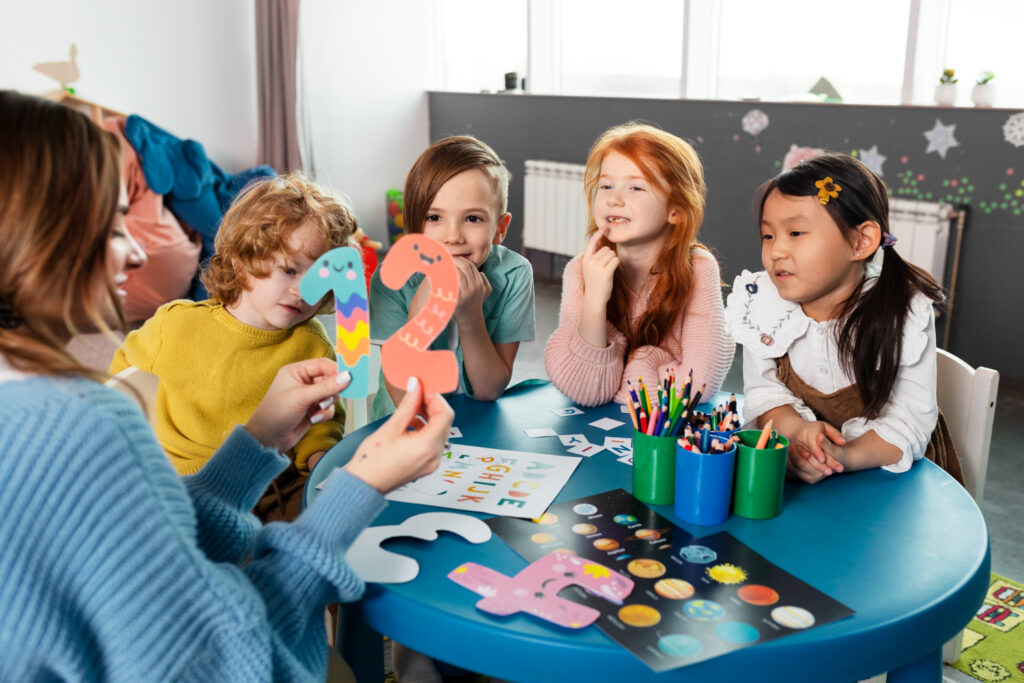
Best Preschool Franchise Models for Tier-2 Cities in India
Tier-2 cities are emerging as the fastest-growing markets for preschool education in India. Rising disposable incomes, increasing awareness about early childhood development, and demand for…

Exploring the Top Finnish Education Systems in India
Introduction: Across the world, the Finnish education system is widely recognized as one of the most innovative and effective models for learning. At HEI School,…
20 Independence Day Activities for Kids in Preschool & Kindergarten
Independence Day is a wonderful opportunity for preschool and kindergarten children to learn about India through fun, age-appropriate activities. From tricolor crafts and patriotic songs…